

News and Events
Please visit the Medical Research - News and events website for non‑FHRI sector news and events



More News
-
 Millions in FHRI funding to give local researchers and innovators a skills boost 11 September 2025 More than $3 million in FHRI funding has been awarded to 3 organisations to develop much-needed skills in the WA research and innovation workforce. The FHRI Fund Research and Innovation Capacity and Capability Building (RICCBP) Program was designed to enhance Western Australia’s health and medical research and innovation capacity and capability through initiatives that build knowledge, foster collaboration and increase national and international competitiveness. Funding was available for proposals across two streams: A. Expert Grant Review Service (EGRS) B. Research and/or Innovation Development Programs (Development Programs). Curtin University’s Next Generation Clinical Trials for WA program will establish a comprehensive clinical trials training, mentoring, networking, education, and support platform to equip clinicians, nursing and allied health workforce to lead glo...
 -
 Strong foundations for health and medical researchers and innovators 11 September 2025 A total of $4,739,553 has been awarded to five Western Australian researchers to increase the scale and excellence of health and medical research and innovation in Western Australia by supporting local infrastructure. The Future Health Research and Innovation (FHRI) Fund’s Enabling Scheme provides capital infrastructure support of between $500,000 and $1.5 million for up to 3 years for WA researchers and innovators to co-fund upgrades to laboratories or facilities, upgrade major equipment, or purchase new equipment used for health and medical research or innovation, to increase the industry offering. Recipients were assessed based on merit by an independent assessment panel. The FHRI Fund Enabling Scheme recipients are shown below: Recipient Responsible entity Activity title Funding awarded ...
 -
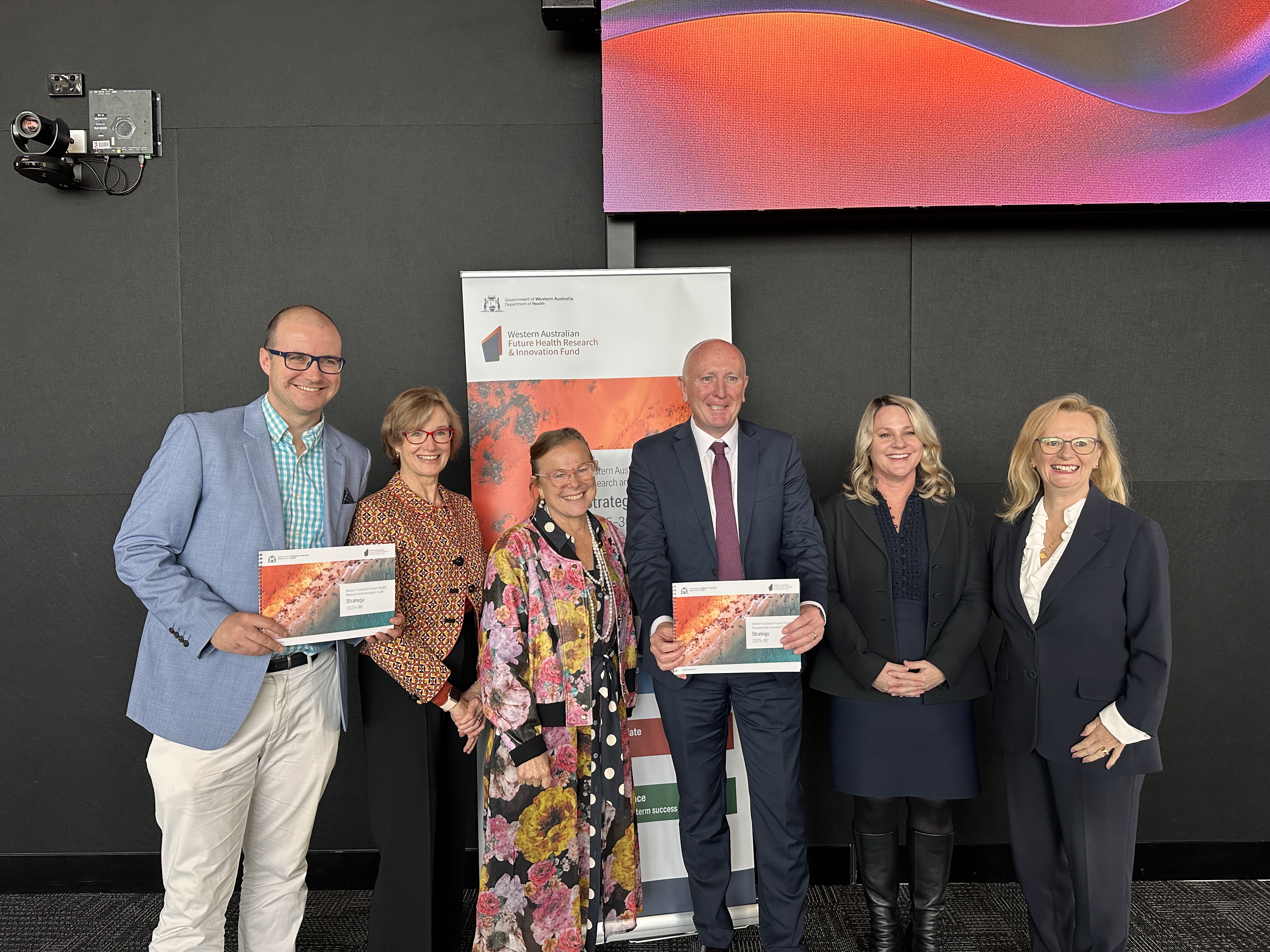 A bold new chapter for WA research – FHRI Fund Strategy 2025–30 05 August 2025 Western Australia’s health and medical research community gathered at Murdoch University on 1 July to celebrate the launch of the Future Health Research and Innovation (FHRI) Fund Strategy 2025–2030 – a visionary roadmap for the next 5 years of transformative impact. The strategy was unveiled by the Hon Stephen Dawson MLC, Minister for Medical Research, who highlighted its shift from broad capacity-building to targeted investment. The strategy is built around 3 powerful themes: connect and collaborate, accelerate and translate, and foundational confidence – each designed to elevate WA’s research ecosystem and deliver real-world health outcomes. At the heart of the launch was the announcement of the Spotlight Program, a flagship initiative inspired by The Challenge that will tackle one major health challenge each year with multiple years of dedicated fundin...
 -
 Foetal monitoring reimagined - WA innovation powered by FHRI backing 05 August 2025 A new device developed in Western Australia is revolutionising how babies are monitored during labour. By detecting oxygen deprivation in real time, it enables faster clinical intervention and reduces risks such as birth asphyxia and cerebral palsy. Trialled at King Edward Memorial Hospital, the device uses a scalp sensor to measure lactate levels in the baby’s blood and transmits data wirelessly, allowing mothers to move freely during labour. It also helps reduce unnecessary emergency caesarean sections, improving recovery and early bonding. This breakthrough was made possible by early-stage support from the Future Health Research and Innovation (FHRI) Fund, which enabled researchers at The University of Western Australia (UWA) to develop the concept into a commercial product. WA medtech company VitalTrace, in partnership with UWA and The University of Sydney, is leading its roll...
 -
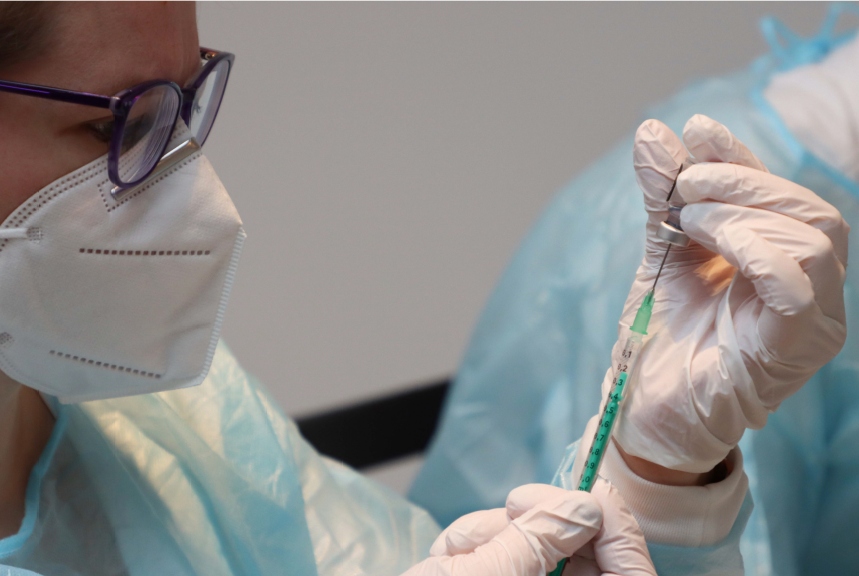 National grant success for WA researcher 05 August 2025 Curtin University researcher Associate Professor Hannah Moore has been awarded around $1.5 million from the National Health and Medical Research Council (NHMRC) Partnership Project funding scheme, made possible by a $1 million grant provided by the Future Health Research and Innovation (FHRI) Fund. Professor Moore’s project aims to characterise Respiratory Syncytial Virus (RSV) epidemiology and dynamics, focusing on paediatric populations and high-risk groups. Respiratory syncytial virus (RSV) is a leading cause of respiratory infections worldwide with a disproportionate burden in young children. Whilst two RSV immunisation therapeutics have shown promising results against severe RSV and are being licenced worldwide, evidence is required to support decisions around optimal use of these therapeutics, including whether to target high risk groups or all infants, and the timing of im...
Last Updated:
12/03/2026